Wisdom from Pastor Luke Evans:
God created that which is of
Surpassing Value
which we may now obtain through
Surprising Simplicity
which ought to motivate us to behavior of
Supreme Sacrifice
(such as selling a whole field to obtain a single pearl - of great value!).
Thanks, Luke!
Showing posts with label from the sermon. Show all posts
Thursday, September 1, 2011
Wednesday, August 17, 2011
Not a TV Survivor!

Many thanks to Pastor Allen Cooney for his encouraging message from Ephesians 2:1-10 this past Sunday. We actually quoted from it several times in our Sunday school class immediately following the service. I had heard bits and pieces of the dramatic story of Louis Zamperini a few times before, but Pastor Allen's "teaser" is no doubt going to drive many of us the read the "rest of the story." I'd like to challenge any Dove Mountaineer to read either the book pictured here, Devil at My Heels, ot the one from which Pastor Allen quoted, Unbroken, give a complete book report in our WorldMovers Sunday School class soon! Zamperini's story is not only amazing because of what he has survived, but because of how he has turned it into a powerful testimony for Christ. To God be the Glory! Tuesday, August 9, 2011
Captain Carefree!
I Peter 5:6-9
6 Therefore humble yourselves under the mighty hand of God, that He may exalt you in due time, 7 casting all your care upon Him, for He cares for you. 8 Be sober, be vigilant; because your adversary the devil walks about like a roaring lion, seeking whom he may devour. 9 Resist him, steadfast in the faith, knowing that the same sufferings are experienced by your brotherhood in the world.
Tuesday, August 2, 2011
"The gospel of the kingdom..."
![]() |
| Stahleck Castle at Bacharach - gone to seed and in need of redemption |
Matthew 9:35-38 35And Jesus went about all the cities and villages, teaching in their synagogues, and preaching the gospel of the kingdom, and healing every sickness and every disease among the people. 36But when he saw the multitudes, he was moved with compassion on them, because they fainted, and were scattered abroad, as sheep having no shepherd. 37Then saith he unto his disciples, The harvest truly is plenteous, but the labourers are few; 38Pray ye therefore the Lord of the harvest, that he will send forth labourers into his harvest
![]() |
| Salzberg Castle - continually renewed; a fortress for beauty and truth |
A reminder from last Sunday's sermon to be renewed continually by the gospel...
Thursday, July 28, 2011
Dr. Randy's "One Thing"
Four things we learn from Nehemiah:
1. Nehemiah asked the right questions.
2. Nehemiah listened.3. Nehemiah sat down and felt deeply.
4. Nehemiah acted decisely.
Sounds pretty relevant for our times, doesn't it? It was encouraging to see several people take Dr. Carlson's "One Thing" bracelet on Sunday. I pray that they will be successful in seeking out and accomplishing their "One Thing."
Here is the book that Dr. Carlson was referring to in his message:
Monday, July 18, 2011
From Steve's Message..
The five imperatives:
1. Preach the word.
2. Be prepared
3. Correct, rebuke, and encourage.
4. Do not follow after "ear ticklers".
5. Discharge all the duties of your ministry.
1. Preach the word.
2. Be prepared
3. Correct, rebuke, and encourage.
4. Do not follow after "ear ticklers".
5. Discharge all the duties of your ministry.
Monday, July 11, 2011
I John 3:1
As our guest pastor, Denny Howard, preached on I John 3:1, I couldn't help but think of this wonderful musical version of the verse. It has been a standard song in every Christian school in which I have taught. We always sang it as a round (canon), just as the Marantha Singers do here.
Sunday, June 12, 2011
Happy Pentecost!
The streets of Jerusalem were bustling with activity on the morning of Pentecost in 33 A.D. An unusually large number of pilgrims had assembled from the four corners of the Jewish world to celebrate the feast. On this fiftieth day after Passover, faithful Hebrews gave thank offerings to God for the gift of Torah, the Law of God revealed on Mount Sinai after the Israelites had escaped from bondage to Pharaoh in Egypt. Observant Jews connect these two events in this line of thinking: Passover was God’s divine deliverance of His chosen people from that age’s most powerful civilization, that of ancient Egypt. When the Israelites were separated by nearly two month’s time, and by all the miles of distance from the banks of the Nile to Mount Sinai, Moses met with God and received the Ten Commandments.
In the fashion of more than a thousand years of observance, those flocking to Jerusalem that year would celebrate with many visits to the temple, for
• singing and dancing in the Court of the Women,
• for the presentation of “first fruits offerings,” brought from the young harvests of their fields back home
• for the offering of sin and thank offerings in the Court of the Israelites
• for all-night Torah readings in the synagogue
• for the eating of seasonal treats made of fruit, milk, flour, and honey in the marketplace
• for connecting with old friends and the making of new friends.
Casting something of a pall over this year’s celebration were reports of some disturbing political and social events in recent weeks. Those visiting from outside of Jerusalem were brought up to date on the news of the upstart Jesus of Nazareth, whose Passover week return to Jerusalem had ended in his crucifixion. The civil disturbances he had caused had troubled some residents about the buying and selling of animals in the outer court of the temple; now the out-of-town visitors noticed a more subdued atmosphere than they has witnessed in previous visits. There was even a disturbing rumor that he had risen from the dead, but up to now, none of his followers had stepped forward to publicly confirm this rumor.
And then it happened.
Those on the periphery of the crowd felt a surge away from the Beautiful Gate of the temple; they felt an unseasonal wind rushing across Temple Mount toward an obscure two story residence on the back side of Mount Zion. Moving with the rest of the crowd in that direction, they found a group of Galileans standing outside the upper room, speaking loudly in the all the languages represented that day in Jerusalem. Everyone pressed closer to hear what they were saying. Hearing that the Galileans might be drunk, some discontinued trying to repss closer and made their way back to the now less crowded temple area. But others swore that they could see tongues of fire over the heads of the Galilean men.
In a few days news of what the Galileans were preaching would be all over Jerusalem – that their Jesus had indeed risen from the dead, had been seen by many witnesses, and as of Pentecost, had sent his Divine Spirit to indwell those who were His followers. Within days those who professed to be His followers had increased by thousands. Within a few years this message would be known all over the Roman Empire. And within the next two thousand years, the message would span the globe in hundreds of languages.
And it all started on Pentecost.
Tuesday, May 3, 2011
Champions need the Spirit of the Lord
As he approached Lehi, the Philistines came toward him shouting. The Spirit of the LORD came upon him in power. The ropes on his arms became like charred flax, and the bindings dropped from his hands. Finding a fresh jawbone of a donkey, he grabbed it and struck down a thousand men. Then Samson said, “With a donkey’s jawbone I have made donkeys of them.With a donkey’s jawbone
I have killed a thousand men.”
Judges 15:14-16
And Samson called unto the LORD, and said, O Lord God, remember me, I pray thee, and strengthen me, I pray thee, only this once, O God, that I may be at once avenged of the Philistines for my two eyes.
Judges 16:28
And what shall I more say? for the time would fail me to tell of Gedeon, and of Barak, and of Samson, and of Jephthae; of David also, and Samuel, and of the prophets: Who through faith subdued kingdoms, wrought righteousness, obtained promises, stopped the mouths of lions.
Hebrews 11:32-33
Thank you, Mike Jones, for this messsage.
Thursday, April 7, 2011
Further thoughts on Mephibosheth
As usual, guest pastor Stu Sherrard brought us a great message Sunday, this time from 2 Samuel 9, the story of David and Mephibosheth. As I continued to meditate on what we learn from this story, I found the following remarks by David R. Reid to be helpful:
"Mephibosheth’s attitude in response to David’s discovery of him is very significant in the picture of 'Mephibosheth and Me.' Even before Mephibosheth knew what David had planned, he prostrated himself and said, 'Here is your servant.' He didn’t try to justify himself or make excuses for his connection with Saul or throw the blame for his situation on others. In the same way, we had to come before God with a 'dead dog' attitude in order to benefit from His mercy. There was not much lower in the Hebrew culture than a dead dog. Many people today are unwilling to assume such a humble attitude. Their humanistic pride and arrogance keep them from experiencing the love and blessings of the King. Let us, the Mephibosheths who are now eating at the King’s table, reach out to them in love and compassion with the King’s official invitation. He wants them to join us in the picture of 'Mephibosheth and Me.'"
Thursday, January 13, 2011
Back home, and a long way from home
Just as we were about to walk into the chapel, I felt the vibration in my pocket signaling a text message - "Gabrielle Giffords was just shot at Safeway." It was from Dove Mountaineer Steve Johnson, director of family discipleship and the co-teacher, with me, of the WorldMovers Sunday School class.
As I read the message, I let out an involuntary groan, which my brother immediately picked up on. I was in my home town of Marietta, Georgia, for his wedding. I immediately assured him it wasn't about anyone in our family, and delayed thinking any more about it until after the ceremony. I even remembered to take out the bride's wedding band and put it on my finger to pass to the minister at the appropriate moment.
Sometimes I like to say that I was using the word "surreal" before it became cliche. I can't think of a better word to describe the feelings I had throughout that long afternoon. As best man, I was proud to stand next to my only brother, who had done the same for me thirty-five years earlier. We stood in the front of the "chapel," as it was called after the large "new" sanctuary was dedicated when I was fifteen years old. Built in 1897, it felt nostalgically soothing to be back within its classic, gothic beauty - marble exterior, high ceiling, stained glass windows, heavy oak doors and trim. At the reception, I visited with a varety of relatives from both sides of our family, one old friend from kindergarten days, a number of friends from the neighborhood, and a host of friends from the church we grew up in. It was so pleasant to share in their joy at this important occasion for my family. Throughout it all, hovering in the back of my mind were questions about what was going on back in Tucson.
That night I sat down in the motel room and devoured the news. Atlanta newscasters spoke of the tragedy in Tucson with appropriate sympathy, but betraying an inevitable detachment from a place so far away in geography and temperament from their familiar Southern culture. I called home, and learned much more from my wife and son. Over the next few days, multiple news sources I tuned in on as I made my way back to Arizona filled in the remaining details.
First Baptist Church of Marietta is so large that when I entered the "new" sanctuary the morning after the wedding, the friendly current senior pastor of about five years did not recognize my name when he introduced himself (my brother is still a member there). He was probably not even aware of the wedding the previous day, so busy is this suburban Atlanta church. I did see a few people I recognized, from a distance, and settled in to worship God in this place so meaningful to my memories.
The one change to the sanctuary was the enlargement to the stage to accommodate a whole orchestra. This was their "traditional" service (the "contemporary" service had been earlier), and the music by the twenty-five piece orchestra and fifty voice choir was stunning. I was thrilled to once again hear the boisterous organ; at the time it had been installed, it was hailed as "the South's finest pipe organ." The children's message was well done, but not nearly as much "fun" as one of Steve's. The pastor's announcements were affably delivered, revealing a busy congregation with a wide variety of interests. All the buzz both before and after the service was about the forecasted ice storm that would hit north Georgia that night, and his announcements included a thoughful entreaty to church staff members to stay home the next day if the roads seemed difficult. Commuting in the overcrowded Atlanta area is extremely complicated to begin with, and southern roads are not equipped for weather hazards.
In the back of my mind was the curious absence of any mention of the Tucson tragedy. Even though it had held top billing on the local news the night before, I could see that it had not "registered" in the minds of most people here. The pastor's sermon was entitled "Why do bad things happen to good people?" He missed a golden opportunity for an opening illustration in not mentioning the shooting, but perhaps he had not watched the news the night before.
Eager to hear the pastor's take on suffering and God's sovereignty, I could not have been more disappointed. I am actually not a tough sermon critic, and am always happy to hear a pastor's persective on most any scripture. In this case, very little scripture was cited (an omission which would have been unthinkable at this church in my youth). Although I was happy to see the pastor introduce the word theodicy* in his message, he did not provide a satisying explanation of much comfort to the listeners. But the worst part was when he affirmed the Baptist term "soul competence," a doctrine he said he "would fight to preserve." It was virtually the only time he became animated in the whole sermon.
While many Baptists (including the most historical sources) define this term to distinguish individual religious liberty against that of an eccelsiastical or national body, this pastor was emphasizing the "decisional" power of the individual as (virtually) self-regenerative. My grasp of the five points of Calvinism could not have been more strongly reinforced had I visited the most orthodox Presbyterian church in Atlanta that morning. There was no hint of unconditional election or irresistible grce in his insistence that we save ourselves by our own choice. Consequently, he was left with no answer for the central question, in essence confessing that "it's a puzzle" why bad things happen, if God is good. His implied conclusion was that more people need to choose God. My conclusion was that his God is not sovereign.
Forgive me if I belabor this point. Throughout the week that has followed, I have watched Tucson dealing with the after-effects of the tragic shooting. If ever there were a time when the relevance of such "dusty" terms as man's depravity and God's sovereignty could be put to the test, it would be here and now. I am so thankful that the believers with whom I fellowship at Dove Mountain are well-provided with answers for the needy Tucsonans around us, when they will inevitably ask us why a good God would let such a bad thing happen: "All this is for your benefit, so that the grace that is reaching more and more people may cause thanksgiving to overflow to the glory of God" (II Corinthians 4:15). It's all grace, from beginning to end.
After a convoluted travel adventure, complicated by the predicted ice storm, I arrived back in Tucson. By Monday evening I was reunited with my dear family, and able to share the impact of this tragedy which had taken place at our neighborhood Safeway. On Tuesday I was reunited with my dear Veritas students, and we could pray together for Tucson, Congressman Giffords, and the many hurting families. By Wednesday, I was having contact with fellow Dove Mountaineers, and we could affirm our faith in God's hand to bring justice and wisdom.
I always enjoy going "back home," briefly, but it was good to be home.
*According to the Merriam-Webster Online Dictionary the meaning is "defense of God's goodness and omnipotence in view of the existence of evil". Encyclopedia Britannica gives the meaning as "explanation of why a perfectly good, almighty, and all-knowing God permits evil." Random House Dictionary writes "a vindication of the divine attributes, particularly holiness and justice, in establishing or allowing the existence of physical and moral evil." The American Heritage Dictionary of the English Language, Fourth Edition states "A vindication of God's goodness and justice in the face of the existence of evil."
Tuesday, November 23, 2010
Catching up...
Today I found notes from the first time Steve Johnson preached, back in September I think. The message was from Luke 4:1-13, the temptation of Christ.
First he cited these two quotations from The Screwtape Letters. Both are advice from Screwtape to his nephew Wormwood:
“He [God] cannot tempt with virtue as we can with vice.”
“Our work is impaired when, in the face of no evidence of God’s presence or intervention, they obey anyway.”
Then these three tips for overcoming temptation:
1. Be proactive: Devotions, Bible reading = “spiritual sweat” - you have to work at it!
2. Be surrounded: We are not required to do it alone.
3. Be aware: On earth, we are never far from temptation. “The devil departed until an opportune time.” (Luke 4:13)
Monday, August 23, 2010
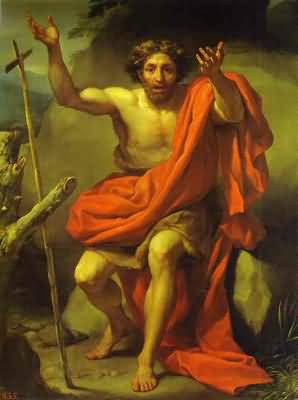
Voice in the Wilderness
Tuesday, August 10, 2010
As the sacred hymn says, he was a "wee little man"
Monday, August 9, 2010
Unbridled prayer

From Pastor Allen's sermon on August 1:
“The prayer of the Christian reaches beyond its set time and extends into the heart of [one's] work. It includes the whole day, and in doing so, it does not hinder the work; it promotes it, affirms it, and lends it meaning and joy. Thus every word, every work, every labor of the Christian becomes a prayer.” Life Together: The Classic Exploration of Faith in Community, Dietrich Bonhoeffer.
Tuesday, July 13, 2010
Thursday, July 8, 2010
The Weight of Glory

Elder Dave Bowen used a fragment of the C.S. Lewis sermon, "The Weight of Glory" in his message on June 27. Here is the climactic ending of Lewis's message:
It is a serious thing to live in a society of possible gods and goddesses, to remember that the dullest and most uninteresting person you talk to may one day be a creature which, if you saw it now, you would be strongly tempted to worship, or else a horror and a corruption such as you now meet, if at all, only in a nightmare.
All day long we are, in some degree, helping each other to one or other of these destinations. It is in the light of these overwhelming possibilities, it is with the awe and the circumspection proper to them, that we should conduct all our dealings with one another, all friendships, all loves, all play, all politics.
There are no ordinary people. You have never talked to a mere mortal. Nations, cultures, arts, civilization — these are mortal, and their life is to ours as the life of a gnat. But it is immortals whom we joke with, work with, marry, snub, and exploit — immortal horrors or everlasting splendours.
This does not mean that we are to be perpetually solemn. We must play. But our merriment must be of that kind (and it is, in fact, the merriest kind) which exists between people who have, from the outset, taken each other seriously — no flippancy, no superiority, no presumption. And our charity must be a real and costly love, with deep feeling for the sins in spite of which we love the sinner — no mere tolerance or indulgence which parodies love as flippancy parodies merriment.
Next to the Blessed Sacrament itself, your neighbor is the holiest object presented to your senses. If he is your Christian neighbor he is holy in almost the same way, for in him also Christ vere latitat — the glorifier and the glorified, Glory Himself, is truly hidden.
Wednesday, July 7, 2010
Cultural Adaptations

I'm sure all the ladies in the congregation were charmed by Pastor Allen's description of himself decked out in his Daniel Boone outfit as a little man. But I was struck by his insight in using this illustration of cross-culturalism. Here he was, an American child growing up in Uruguay, Argentina, Chile, and Australia, trying to cling to his national and cultural identity. As he explained, holding on to the myths of American folklore was one of the tangible ways he could identify with his native land.
It reminded me of a similar story my wife Linda tells from her missionary days in Peru in the 1960's. One of the mission families sent their five-year-old to Peruvian kindergarten so that he could become fluent in Spanish (most of the MK's in her mission were tutored at home). It was common in Peru at that time for kindergarteners of both sexes to wear dress-like smocks, which went almost to the ground. Fortunately, young Scotty Furr had no cultural biases against this, and was not self-conscious about it at all. He also saw no incongruity in trotting off to Spanish kindergarten with his Gene Autry cowboy boots sticking out from underneath his adorable little smock. But it was a source of amusement to my dually-cultured wife!
Tuesday, July 6, 2010
Metaxas on Wilberforce

In challenging us to "find the slavery issue of our generation" in his message on Sunday, Pastor Allen quoted from the 2007 biography of William Wilberforce, the English Member of Parliament responsible for outlawing slavery in the British Commonwealth. Metaxas, a Yale graduate, is already familiar to WorldMovers from the article we read about his newly published biography of Dietrich Bonhoeffer. He is also no stranger to World magazine, which did a recent article about Metaxas's ambitious "Socrates in the City" project.
Here is a description of the Wilberforce book from Eric Metaxas's own web site:
Amazing Grace tells the story of the remarkable life of the British abolitionist William Wilberforce (1759-1833). This accessible biography chronicles Wilberforce’s extraordinary role as a human rights activist, cultural reformer, and member of Parliament. At the center of this heroic life was a passionate twenty-year fight to abolish the British slave trade, a battle Wilberforce won in 1807, as well as efforts to abolish slavery itself in the British colonies, a victory achieved just three days before his death in 1833.
Metaxas discovers in this unsung hero a man of whom it can truly be said: he changed the world. Before Wilberforce, few thought slavery was wrong. After Wilberforce, most societies in the world came to see it as a great moral wrong. To mark the 200th anniversary of the abolition of the British slave trade, Harper/SanFrancisco and Bristol Bay Productions have joined together to commemorate the life of William Wilberforce with the feature-length film Amazing Grace and this companion biography, which provides a fuller account of the amazing life of this great man than can be captured on film.
This account of Wilberforce’s life will help many become acquainted with an exceptional man who was a hero to Abraham Lincoln and an inspiration to the anti-slavery movement in America.
Friday, July 2, 2010
The painting that started a quest

Behold, I stand at the door, and knock: if any man hear my voice, and open the door, I will come in to him, and will sup with him, and he with me. Revelation 3:20 KJV
Dave Bowen cited this painting by Warner Sallman as an element the Lord used to start Dave's quest toward discipleship. Although I had seen many reproductions many times, it was not until adulthood that someone pointed out to me for the first time that there is no external handle on the door. Dave explained the implication that the door must be opened from the inside.

Sallman is also the artist of this well known "Head of Christ" which was ubiquitously displayed in churches and homes in my childhood. To be honest, I never found it very appealing. Even as a child I found it overly sentimentalized. Ironically, the biography of Warner Sallman says that he was inspired to paint this way when the dean of Bible Baptist Institute, Dr. E. O. Sellers, said to him, “Sometime I hope you give us your conception of Christ. And I hope it’s a manly one. Most of our pictures today are too effeminate.”

Probably most of the people of my generation did find it too effeminate, even though it was Sallman's intent not to portray Jesus that way. By the time the defining moment of our Christian era came along, the Jesus Movement of the 60's and 70's, we were more comfortable portraying Jesus with somewhat shorter hair and a "revolutionary" style.
As Reformed Christians, a concern for the second commandment ought to discourage us from attaching too much importance to any visual representation of Christ. The danger, however, in a total abstention from Christian imagery, is the implied gnosticism it leads to. If Jesus can't be represented visually, it is tempting to forget He was a man, God Incarnate, in the flesh. The only danger I see of imagery, of course, would be the danger of worshipping a specific image of Christ.

At this stage in life, I prefer historic or iconic art; they give Christ a place in history without too much danger that such artistic depictions will become idols. I am fond of these two images by Reformation era artist Matthias Grunewald.
As for iconography, I stated earlier that it has the advantage of not being too close to human realism. Yet its colorful imagery conveys story and meaning in a delightful way. My very favorite icon of all time is this depiction of the Trinity by fifteenth century iconographer Andrei Rublev.

Finally, I close with this modern iconic version of the very painting that Sallman made famous. And we are thankful that it pleased God, in His Providence, to use Sallman's version to draw our brother Dave to Himself.
Subscribe to:
Posts (Atom)